For insurance companies
See the book on a date: duration, ratings, cash flows and concentration. Check remaining limit capacity before the trade. Run market and credit risk and scenario cash flows.
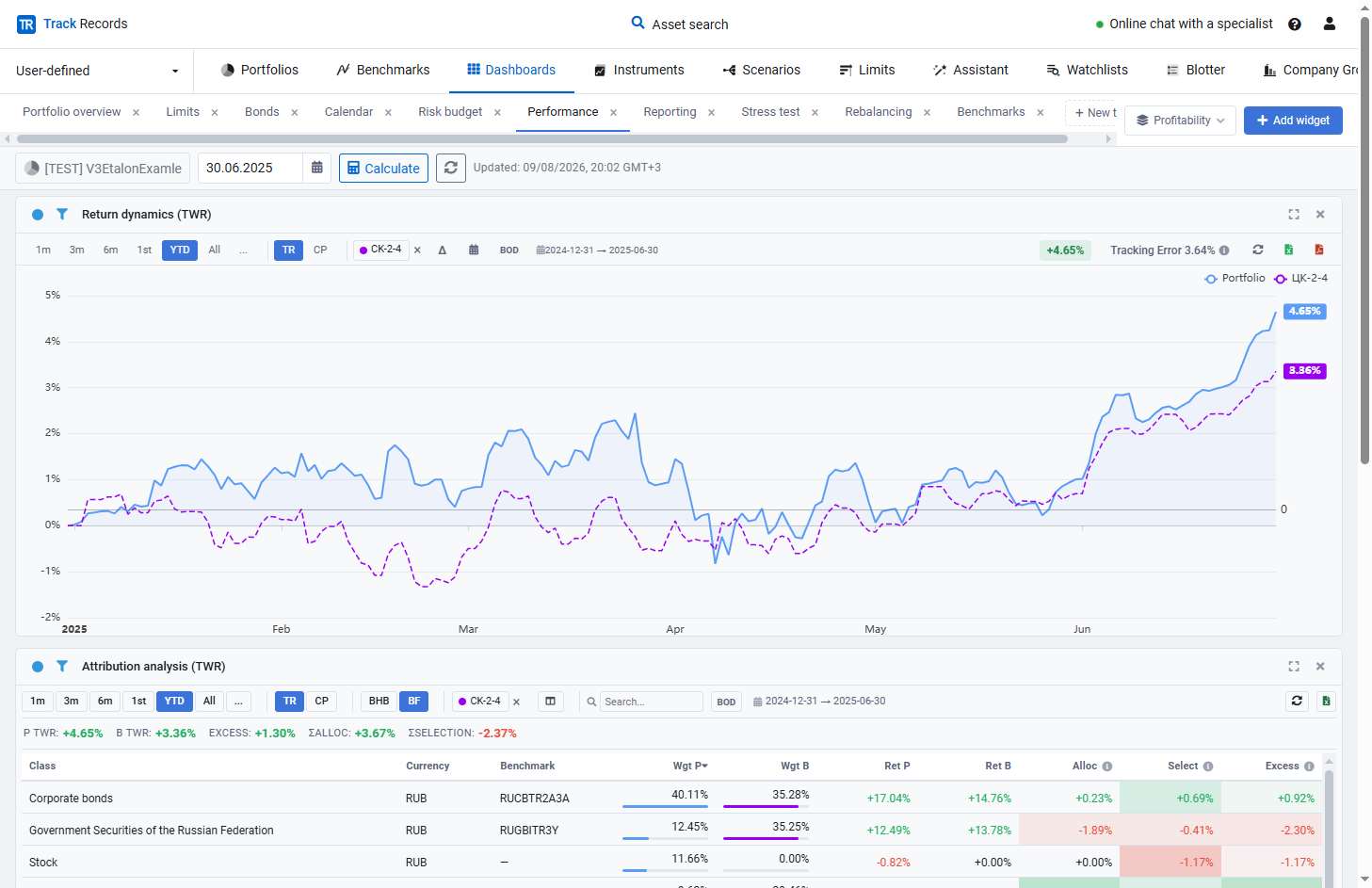
Who uses it and why
Holdings on a date, duration, ratings, cash flows and concentration next to the same limit sheets the risk team uses.
Forecast coupons and principal, including scenario-dependent floaters, and see how the book behaves if rates move.
Before execution, see whether the book stays inside asset-mix, concentration, credit-quality and duration rules.
VaR, credit quality and scenario returns on the current composition, without a separate risk warehouse.
What insurers run in TrackRecords
Holdings, cash-flow forecasts, investment-policy limits, market and credit risk.
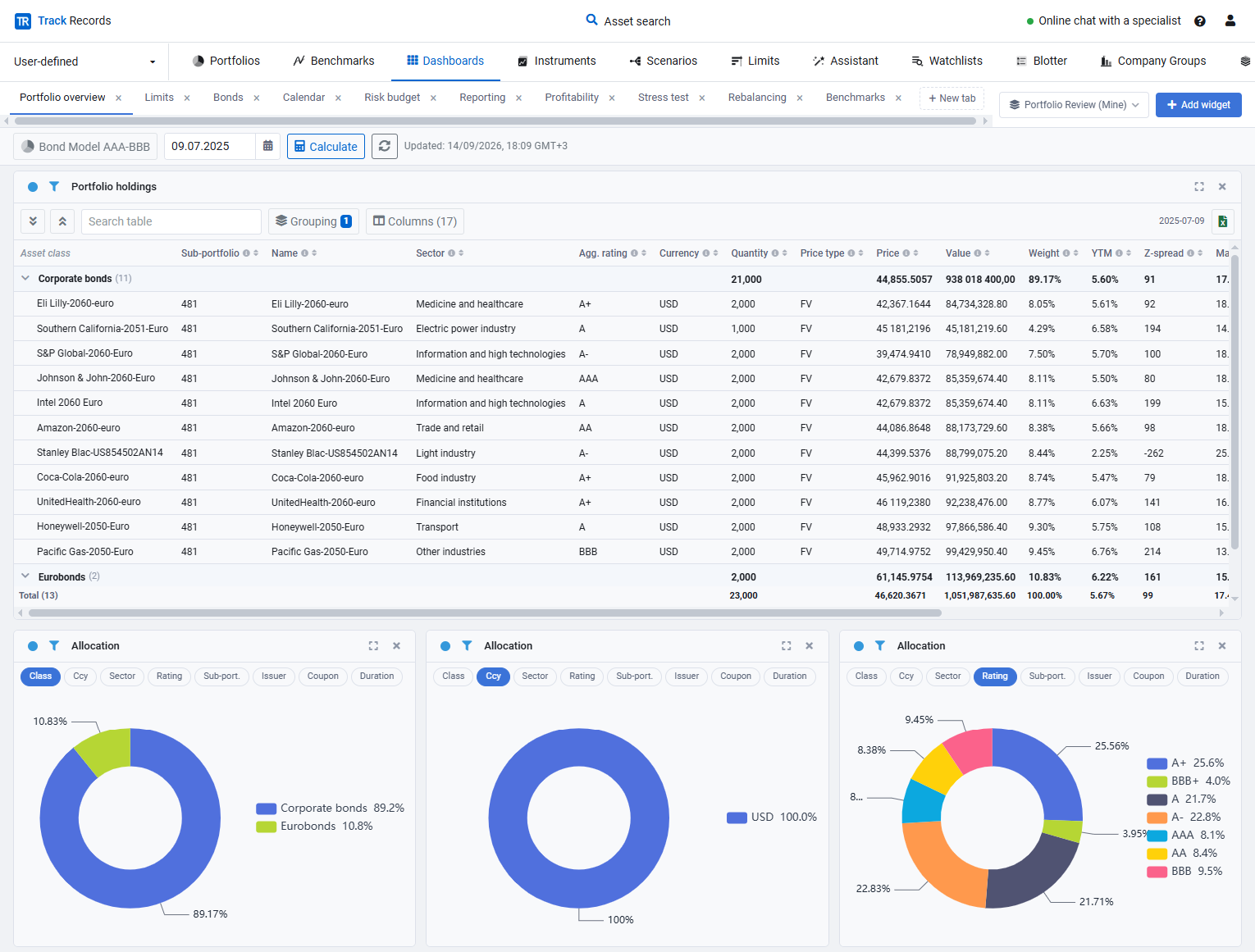
See the book and its characteristics
Holdings on a reporting date: structure, duration, credit quality, concentration and a cash-flow forecast.
- Holdings on the reporting date
- Structure by asset class, issuer and rating
- Duration and maturity profile
- Concentration
- Coupon and principal forecasts
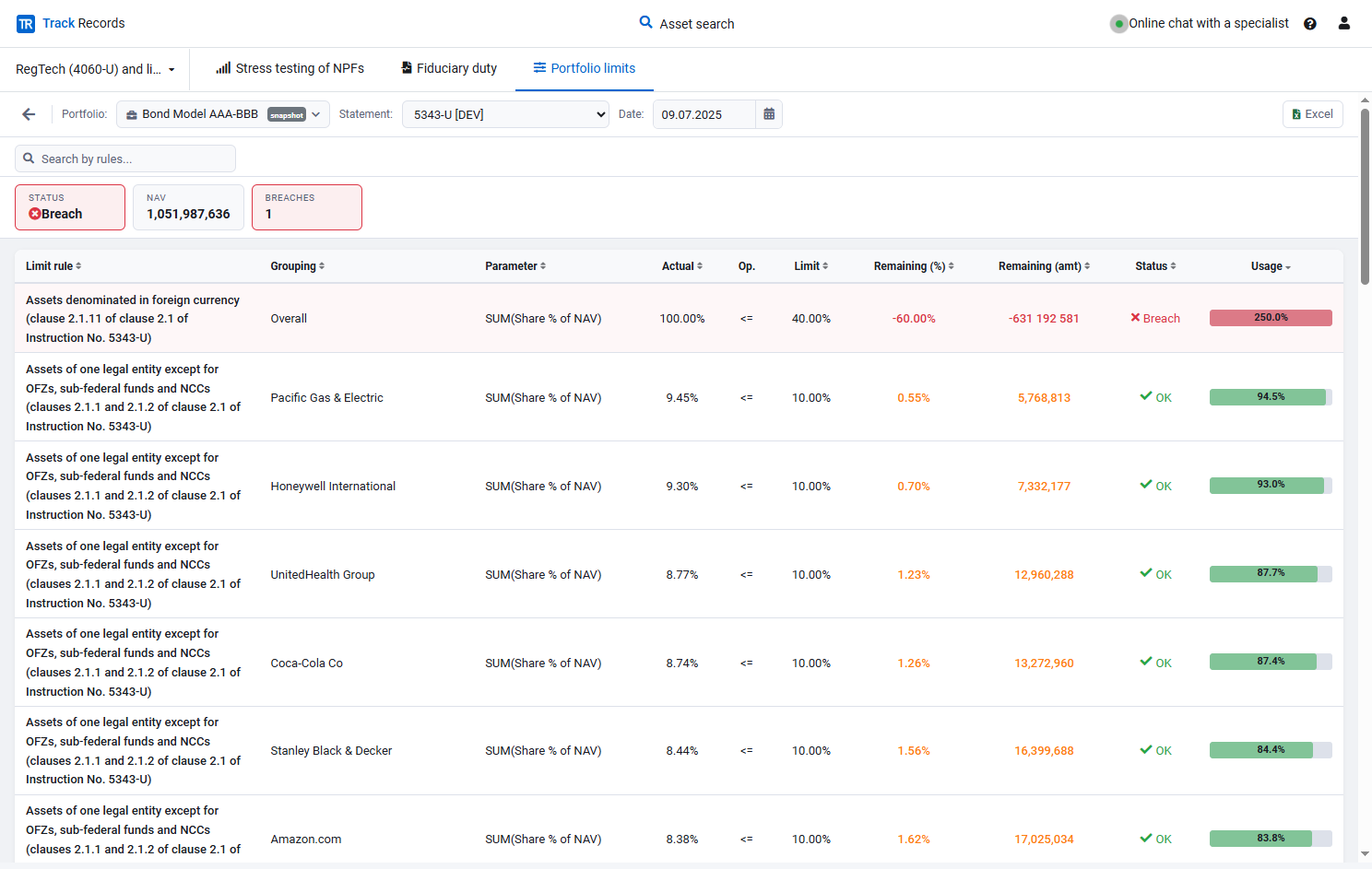
Check limits before the trade
The constraint is visible before execution: asset mix, concentration, credit quality, duration and floater share.
- Remaining capacity before execution
- Asset mix and concentration
- Issuer credit quality
- Duration, maturity and floater share
- Post-trade checks
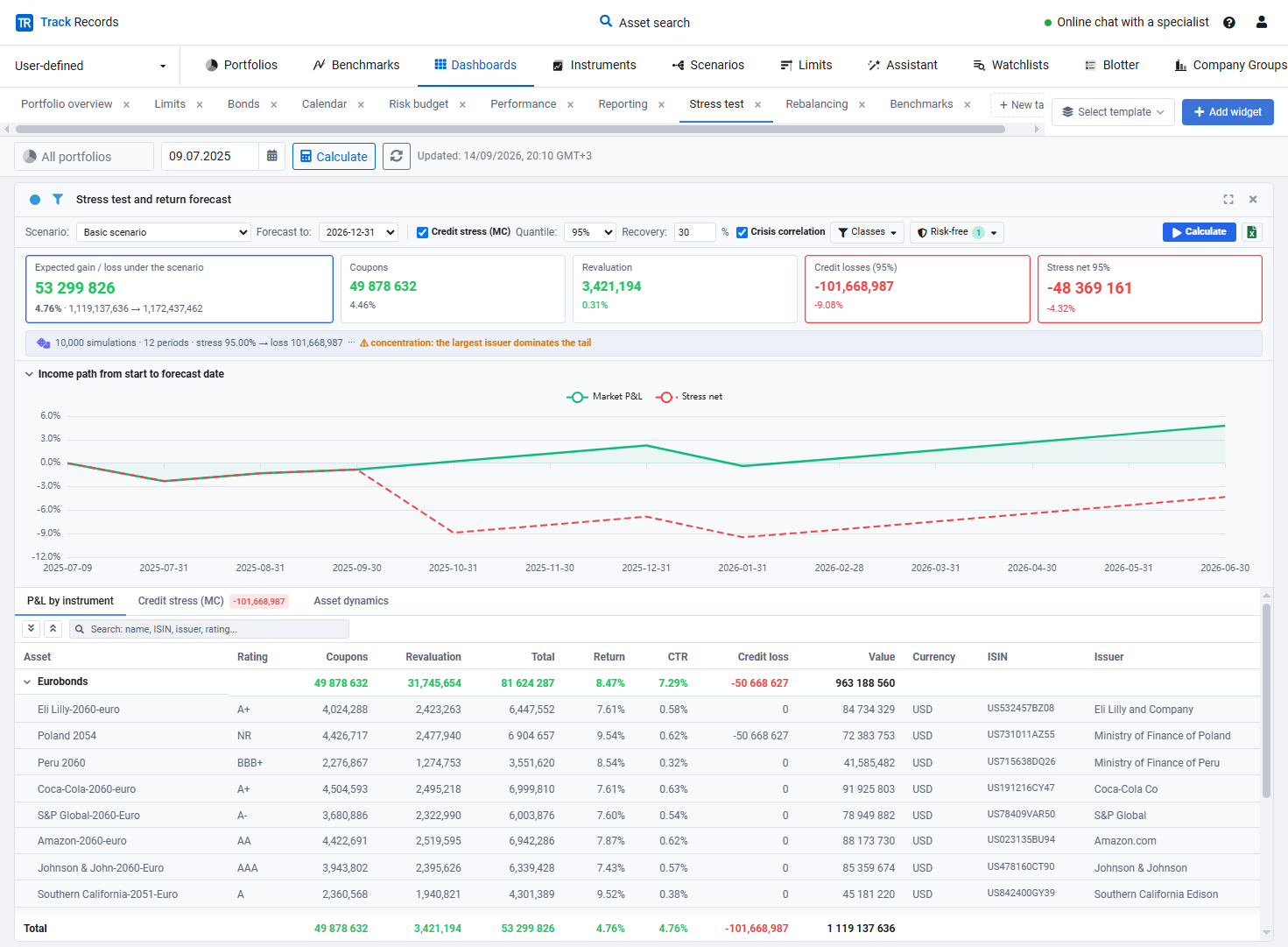
Run market and credit risk and scenarios
VaR, duration and DV01 on the current book. Returns and cash flows under a chosen scenario. Stress the composition without a custom model each time.
- VaR, duration, DV01 and sensitivity
- Credit quality and issuer concentration
- Scenario returns and cash flows
- Portfolio stress
Calculate on holdings from the accounting system
Transactions and snapshots come in from the books. Composition, limits, risk and scenario results go back to adjacent systems through the API.
Data and automationSee TrackRecords in a live demo
We'll walk you through the platform and how it fits your investment process.